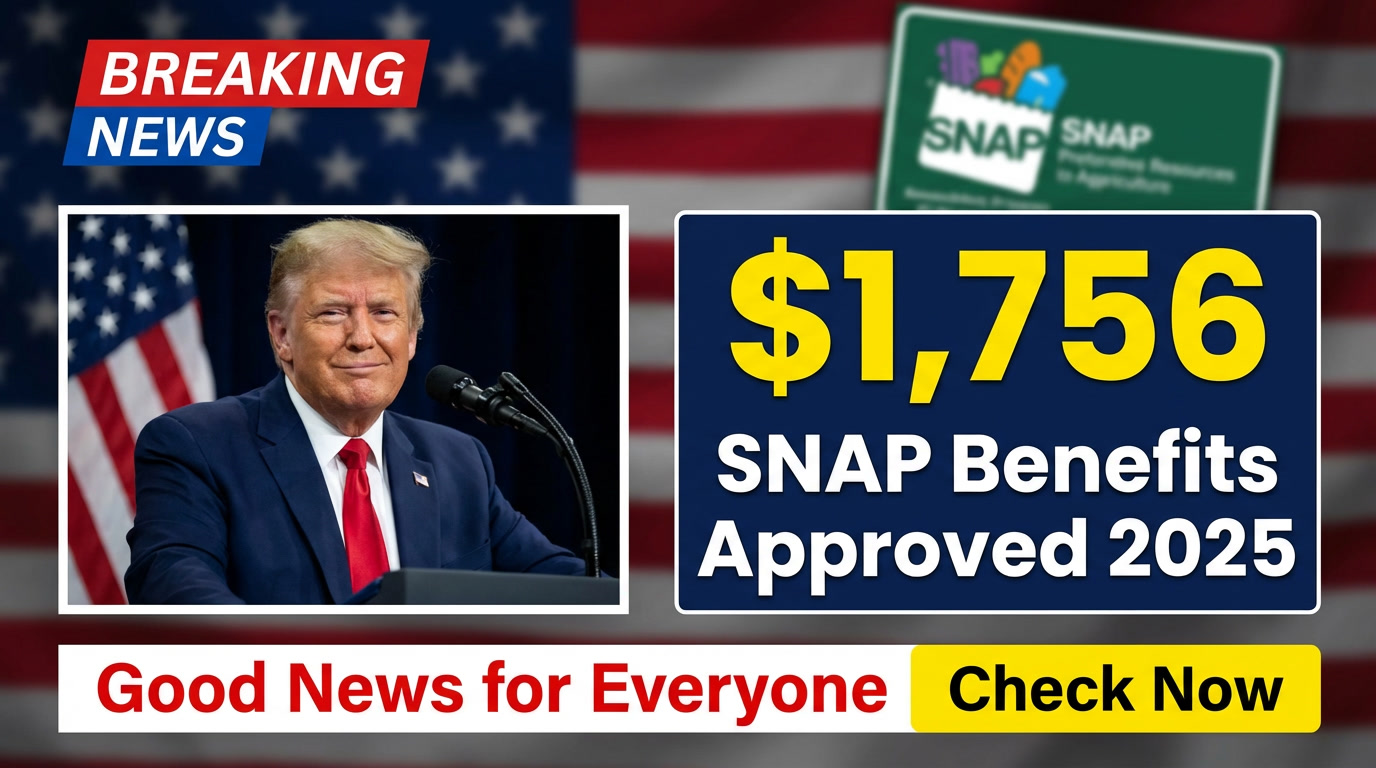
The news hit inboxes like a small lifeline: “$1,756 SNAP Benefits Approved.” For hundreds of households across Galveston County, that single line carried the weight of weeks—sometimes months—of anxiety over rising grocery bills and thinning wallets.
In a year when food prices stubbornly hover above pre-pandemic levels, this approval offers something rare—relief. Families struggling to stretch paychecks can finally afford the basics again: fresh produce, milk, rice, maybe even the occasional treat that’s been off the list for far too long.

But behind this good news, a storm is brewing in Washington.
SNAP Boost Arrives Amid Looming Policy Shifts
The timing couldn’t be more complicated. The $1,756 approval comes just as sweeping changes to the Supplemental Nutrition Assistance Program (SNAP) are set to roll out in December 2025, following the passage of the One Big Beautiful Bill Act, signed earlier this year by President Donald Trump.
According to the U.S. Department of Agriculture (USDA), these new rules primarily target Able-Bodied Adults Without Dependents—known in policy shorthand as ABAWDs. The upcoming standards will tighten work requirements and limit exemptions in certain regions that previously had waivers due to high unemployment.

Read Also- IRS Announces Gigantic Tax Refund for Next Year — Who Qualifies
In short, the government’s message is clear: food aid will remain available, but only for those actively engaged in the workforce or job training programs.
What the $1,756 Approval Means for Families
For many Galveston County households, the immediate focus isn’t federal policy—it’s survival. The average monthly SNAP benefit per person in Texas has hovered around $180–$200, according to Texas Health and Human Services (HHS). A one-time approval of $1,756 represents nearly nine months of typical assistance for a single household.

That money translates into real food on real tables—especially in a year when grocery prices in the Houston-Galveston area are up roughly 3.8% over 2024, based on Bureau of Labor Statistics data.
Here’s what an average Galveston County family might expect to spend that $1,756 on:
| Category | Average Monthly Spending (Before SNAP) | Portion Covered by $1,756 SNAP Benefits |
|---|---|---|
| Fresh Produce & Dairy | $180 | 3–4 months |
| Grains & Dry Goods | $120 | 4–5 months |
| Meat & Poultry | $250 | 2–3 months |
| Beverages & Household Staples | $150 | 3 months |
| Total | $700 | ~2.5 months of full grocery coverage |
For parents juggling rent, fuel, and utilities, those two or three months of coverage can mean breathing room.
The New Reality: Stricter Work Requirements
The relief, however, may be short-lived for some. Starting December 2025, ABAWDs—adults aged 18 to 52 without children or disabilities—will face stricter federal oversight.
Under the new rules:
- Recipients must work or participate in an approved job training program for at least 30 hours per week.
- States will have fewer exemptions to waive these requirements.
- Failure to meet conditions for more than three months in a 36-month period could mean loss of benefits.
Before, certain counties—including parts of Galveston—qualified for temporary waivers due to economic hardship. That leniency may soon disappear.
A local caseworker at the Galveston County Department of Human Services, who asked not to be named, told us: “The rules are changing fast. Families need to stay updated and document everything—work hours, training attendance, even medical records. Missing one report could risk benefits.”
Balancing Food Security and Workforce Participation
Supporters of the bill argue that stricter standards promote economic independence. “The goal is not to cut people off,” one USDA spokesperson said during a recent press briefing. “It’s to ensure able-bodied adults are engaged in productive activity while still having access to food assistance.”
Critics, however, say the timing couldn’t be worse. With inflation lingering and housing costs climbing, many workers are stuck in unstable part-time jobs without guaranteed hours—making it hard to consistently meet work thresholds.
For families relying on SNAP, that instability translates to anxiety. “I’ve got two jobs, and my schedule changes every week,” said Carla Martinez, a restaurant worker in Texas City. “I’m scared they’ll say I don’t work enough hours and take the benefits away. That $1,700 is the only reason I can cook a full meal for my kids this Christmas.”
Planning Ahead: How to Stay Eligible
Experts recommend SNAP participants take proactive steps before the new rules kick in:
- Keep detailed work records. Pay stubs, schedules, and employer verification will be essential for re-certification.
- Check state-specific SNAP updates via the official Your Texas Benefits portal.
- Engage in approved training programs—local workforce commissions often have free or subsidized options that count toward work requirements.
- Report changes quickly. Income fluctuations or job loss should be reported within 10 days to avoid benefit interruptions.
The Bigger Picture
The $1,756 SNAP benefit approval is both a relief and a warning. Relief because it offers a tangible lifeline for those barely managing grocery costs. Warning because the coming months could reshape who qualifies for that help—and how easily they can keep it.
For Galveston County, where nearly 12% of residents rely on SNAP, these updates are more than bureaucratic footnotes. They’re the difference between having dinner on the table or skipping meals to keep the lights on.
The story isn’t over yet. If the One Big Beautiful Bill Act delivers on its promise to “empower the workforce while protecting the vulnerable,” it could redefine America’s food safety net for the next decade. But for now, families are focused on something simpler—making that $1,756 stretch as far as possible.
FAQs
Who qualifies for the $1,756 SNAP Benefits Approved program?
Eligible households must meet income and residency criteria set by the Texas Health and Human Services Commission and comply with new federal work rules for 2025.
When do the new SNAP regulations take effect?
Most updates under the One Big Beautiful Bill Act of 2025 will take effect in December 2025.
How can I check my SNAP benefit status in Galveston County?
You can visit the official Your Texas Benefits website or call 2-1-1 for local assistance.
Will all ABAWDs lose waivers under the new law?
Not all, but far fewer regions will qualify for exemptions. Texas will review county-level unemployment data before granting waivers.