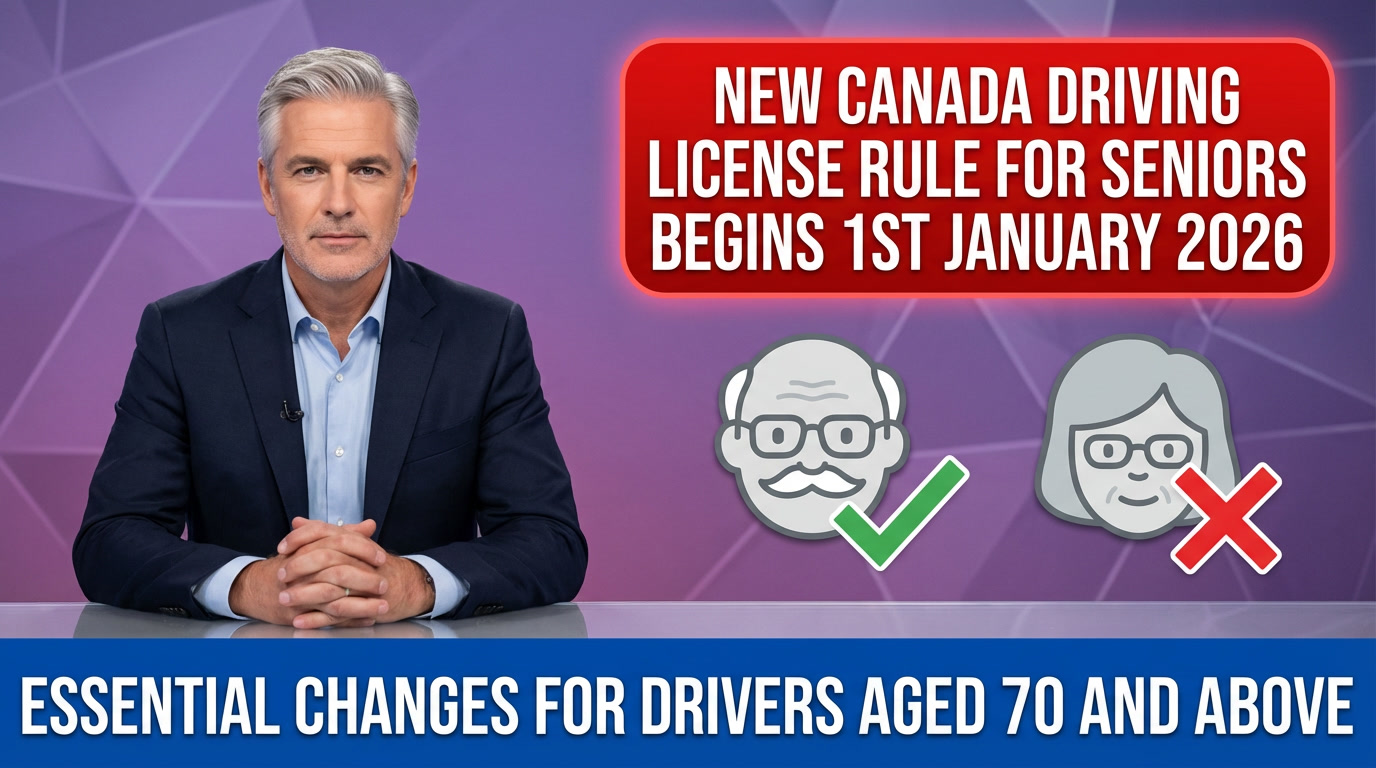
Canada’s senior drivers are about to see some big changes on the road—and not everyone’s clear on what’s really going on. Rumors of a “federal senior driving law” taking effect in January 2026 have spread fast online, but the truth is a lot more provincial. Here’s what’s actually happening, why the rules are changing, and how older Canadians can prepare before the new standards roll out next summer.
Why the Change Is Happening
Let’s get one thing straight—driver licensing in Canada isn’t handled by Ottawa. It’s managed by provincial and territorial governments, like Ontario’s Ministry of Transportation, British Columbia’s ICBC, and others across the country.

So no, there’s no federal law coming into force in January 2026. What is happening is a coordinated effort among provinces to bring more consistency to how they handle drivers aged 70 and older. The push comes amid growing concerns about road safety and the realities of an aging population—by 2030, nearly one in four Canadians will be over 65.
In short, the provinces are trying to modernize their systems without punishing seniors who still drive safely.
What the New Senior Driving Rules Mean
Starting January 2026, provinces and territories are expected to phase in a standardized framework for older drivers. Each jurisdiction will retain control over when and how to implement the changes, but the guidelines will share several key features:
| Proposed Update | Description |
|---|---|
| Medical check at 70 | Drivers aged 70+ will need a medical evaluation when renewing their license. |
| Periodic reviews | Follow-up assessments every 2–5 years, depending on medical results. |
| Refresher courses | Some provinces may add short, in-person or online safe-driving refreshers. |
| Cognitive testing | Drivers showing signs of impairment may be referred for cognitive assessments. |
| Conditional licenses | Restrictions like “no night driving” or “local area only” may apply in specific cases. |
These adjustments are designed to detect early signs of health-related driving issues while avoiding a blanket approach that forces everyone to stop driving at a certain age.
As the Government of Canada’s Seniors division has noted, aging affects each person differently—so it’s ability, not age, that matters most.
Balancing Safety and Independence
Here’s the tightrope: the government wants safer roads, but it also knows that driving is a lifeline for many seniors, especially in rural areas. Losing a license can mean losing independence—no grocery trips, no social visits, no doctor appointments.

To soften the blow, provinces are exploring programs like:
- Free or discounted senior transit passes
- Community shuttle services for medical appointments
- Expanded ride-share credits or volunteer driver networks
- Home delivery partnerships for groceries and prescriptions
The idea is to make sure mobility doesn’t vanish the moment someone hands in their keys.
The Cost Question
One sticking point is who pays for these new assessments. A standard medical exam might cost anywhere from $100 to $250, depending on the province, and more comprehensive evaluations—like cognitive testing—can add to that bill.
Provincial health coverage varies widely. For example, Ontario’s OHIP covers certain medical forms for senior driver renewals, while in Alberta or Nova Scotia, parts of the exam may come out-of-pocket. It’s still unclear whether all provinces will subsidize these upcoming exams, though discussions are ongoing between ministries and healthcare providers.
For retirees on fixed incomes, even a small fee could sting.
Concerns About Age Discrimination
Not everyone’s thrilled about the age-based screening. Some advocacy groups argue that targeting drivers purely based on age—rather than driving record or accident history—could infringe on the Canadian Human Rights Act.
Legally, governments can justify age-based policies if they’re for public safety, but critics say these rules risk sending the wrong message—that being older automatically makes you unsafe. So far, no major legal challenges have been filed, but experts expect debate to heat up once the new rules take effect.
How Seniors Can Prepare
If you’re nearing 70—or have a parent who is—there’s no need to panic. A bit of preparation goes a long way. Here’s what experts suggest:
- Book an early eye exam. Many drivers underestimate how much their vision changes over time.
- Stay active and alert. Regular physical activity helps maintain flexibility and reaction times.
- Brush up on rules. Online practice tests and senior refresher courses can boost confidence.
- Monitor your medications. Some prescriptions affect alertness; talk to your doctor.
- Stay informed. Check your province’s transportation website for local requirements.
Being proactive keeps you in control—and might even help you avoid a re-test surprise at renewal time.
FAQs
Is there a national rule taking away licenses at 70?
No. Licensing remains a provincial responsibility. Seniors won’t lose their licenses automatically.
What will actually change for older drivers?
Most provinces will introduce standardized medical exams and possibly refresher courses, but the timing and details vary.
Are these tests based on age or ability?
They’re ability-based. The goal is to ensure medical fitness to drive, not to penalize age.
Will the medical exams be free?
That depends on your province. Some health plans may cover the costs; others may not.
Could these rules face legal challenges?
Possibly. Some critics argue they could breach age discrimination laws, though no major court cases have surfaced yet.