1. Global Overview & Scale
- The United Nations Office on Drugs and Crime (UNODC) Global Report (covering 155 countries) remains one of the most comprehensive sources. (UNODC)
- According to an analysis updated for 2025, about 49.6 million people are estimated to be living in modern‐slavery situations (which overlaps with trafficking) globally. (Agape International Missions)
- Of these roughly 27.6 million are estimated to be in forced labour. (Agape International Missions)
- And about 22 million are estimated in forced marriages (many trafficked). (Agape International Missions)
- Why the ambiguity? Because trafficking is a “hidden crime”: many victims don’t get identified; data lags; definitions vary. (Migration Data Portal)
2. Regional Trends & Notable Shifts
Europe
- In the European Commission’s data (EU member states) for 2023: 10,793 victims of human trafficking were registered. That’s a 6.9% increase from 2022—the highest level recorded since 2008. (Migration and Home Affairs)
- 63% of those victims were women or girls. (Migration and Home Affairs)
- Children comprised about 13% of the victims—slightly lower than the previous year. (Migration and Home Affairs)
- Major exploitation types: ~44% sexual exploitation, ~35% labour exploitation, ~20% “other” (benefit fraud, forced begging, organ removal) in the EU. (Migration and Home Affairs)
- Interpretation: More victims are being detected, or better recorded—and exploitation is broadening beyond just sex‐trafficking.
India & South Asia
- The United States Department of State 2025 “Trafficking in Persons” (TIP) country report for India noted that government identified 7,134 trafficking victims and 900 potential victims in 2022. (State)
- This shows India remains one of the key source, transit and destination countries for human trafficking.
Cyber‐Trafficking / Digital Exploitation
- Recent academic research emphasises a rising phenomenon: victims of trafficking being coerced into cybercrime or online exploitation (so‐called “cyber‐slavery”). (arXiv)
- Also: research mapping trafficking networks shows increasing use of digital platforms, cryptocurrencies, and the dark web to facilitate human trafficking in the post‐conflict contexts (e.g., Ukraine/Russia). (arXiv)
- Implication: Trafficking isn’t only about physical movement or forced labour in factories—it’s now digital, global and harder to trace.
3. Victim & Offender Statistics
- In the U.S., the National Human Trafficking Hotline (operated by Polaris) reported for 2024:
- 11,999 cases identified. (National Human Trafficking Hotline)
- These involved 21,865 victims. (National Human Trafficking Hotline)
- Of those cases: ~6,647 sex trafficking, ~2,220 labour trafficking, ~1,360 both. (National Human Trafficking Hotline)
- Key observations:
- Sex trafficking remains dominant in reports.
- Labour trafficking is smaller in number of tips—though likely under‐reported.
- Many cases involve mixed exploitation.
- On the offender side: e.g., in a 2025 country report for another nation (Qatar) – “967 alleged traffickers” were charged in 784 cases: 602 for sex trafficking, 212 for labour trafficking, 153 for other forms. (U.S. Embassy Uganda)
- Gender & age of victims (global estimates): women & girls make up ~71% of victims; children ~25%. (Agape International Missions)
4. “Shocking” or Emerging Trends
- Rising numbers: As evidenced in the EU, victim registration is increasing. This could reflect improved detection—but also may signal actual increases in trafficking.
- Expanding exploitation types: Apart from sex & labour trafficking, the “other” category (benefit fraud, forced begging, organ removal, forced criminality) is growing. (EU data: >20% ‘other’) (Migration and Home Affairs)
- Digital, cross‐border exploitation: More cases of forced labour in scam or fraud centres, children or young adults coerced into online criminality. E.g., academic research on “cyber slavery”.
- Detection & prosecution challenges: While victim counts rise, many cases still go unreported, investigations lag, and prosecutions are low relative to the scale.
- Complex journeys of victims: Victims may be trafficked within their own country, across borders, then exploited digitally or physically. The routes and methods are becoming more diverse and interconnected.
- Resource & policy gaps: Some government systems are under strain. For example, one news report noted over 7,300 migrant child trafficking reports in the U.S. were uninvestigated. (New York Post)
5. What This Means for India / South Asia
- Given India’s size and socio‐economic diversity, the upward global trends highlight both risks and opportunities: risks of rising trafficking, especially for vulnerable populations; opportunities for stronger detection and response.
- Border zones, migration flows, digital recruitment and scams could increasingly become fronts for trafficking in the region.
- Coordination among countries (South Asia, Southeast Asia) is key since many trafficking operations are transnational.
- Digital awareness and monitoring become more important—both for recruitment via social media/online job offers and for identifying victims in cyber exploitation.
6. Key Takeaways & Recommendations
- Victim numbers are rising — whether due to improved detection or actual increases, the problem is not shrinking.
- Trafficking is evolving — beyond forced labour and sex trafficking we now see digital exploitation, forced criminality, online scams, and multi-stage trafficking pipelines.
- Detection and enforcement must adapt — Law-enforcement, NGOs and governments must invest in digital tools, data sharing, cross-border cooperation.
- Support for victims remains critical — Rescue is only a first step; long‐term rehabilitation, legal support and socio‐economic reintegration are essential.
- Prevention is vital — Raising awareness, reducing vulnerability (poverty, migration risks, deceptive job offers), strengthening labour protections, and promoting ethical business practices.
- Data & transparency matter — Better, more granular data helps target resources, measure progress and expose trafficking networks.
Human trafficking remains one of the most challenging crimes to quantify and combat. But the trends of 2025 show clearly that the fight must adapt to new forms of exploitation—especially digital and cross‐border—and that global coordination more than ever matters.
FAQs
Are the rising victim numbers a sign that trafficking is increasing globally?
Not necessarily solely. Rising numbers can reflect better detection and reporting. But they also alarmingly suggest that trafficking may indeed be growing or shifting in form. For example, the EU increase of 6.9% in registered victims in 2023. (Migration and Home Affairs)
What new forms of human trafficking are emerging in 2025?
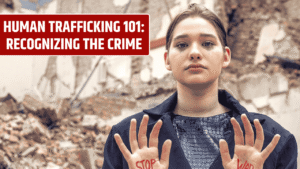
Key emerging forms include digital exploitation (victims forced into scam centres, online fraud), forced criminality, and more cross‐border or virtual trafficking chains. Research on “cyber slavery” highlights this. (arXiv)
Why are many cases still unreported or undetected?
Because trafficking is clandestine: victims fear retaliation or feel shame; traffickers hide operations; jurisdictions vary in capacity; digital networks make detection harder. Also, some victims do not self‐identify or cannot access help. (Migration Data Portal)
How effective are prosecutions globally?
Because trafficking is clandestine: victims fear retaliation or feel shame; traffickers hide operations; jurisdictions vary in capacity; digital networks make detection harder. Also, some victims do not self‐identify or cannot access help. (Migration Data Portal)
What should be done at a community or individual level?
Stay informed about the signs of trafficking; support ethical labour practices; be cautious of suspicious job offers or migration promises; support or volunteer with local organisations; report suspicious activities to appropriate authorities.