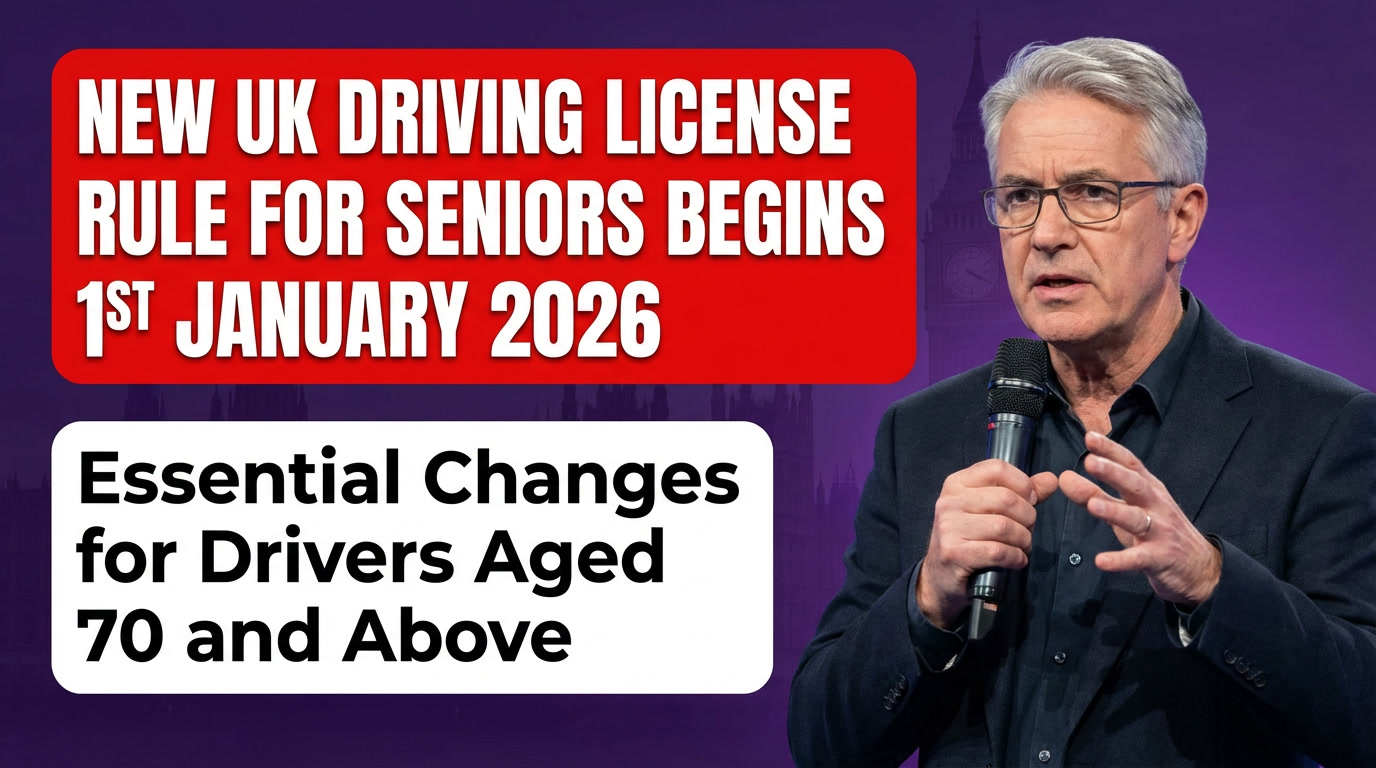
Starting 1st January 2026, senior drivers in the United Kingdom may need to clear a few more hurdles before keeping their car keys. The Driver and Vehicle Licensing Agency (DVLA) is preparing to roll out updated rules for drivers aged 70 and above—a move that’s already sparking national debate about safety, independence, and fairness on Britain’s roads. While details remain fluid as of January 2025, early indications suggest that the next round of renewals could look quite different from what older drivers are used to.
The Current System: A Simple Declaration
Right now, British motorists must renew their driving licence at 70, and then every three years after that. The process is simple: fill out a renewal form—either online through the DVLA portal or by post—confirm your medical fitness, and meet minimum vision requirements.

No doctor’s note. No in-person tests. Essentially, it’s a self-declaration of good health.
That’s the part likely to change.
What’s Expected to Change in 2025
According to preliminary discussions within the DVLA and the UK Department for Transport, the government is considering a more evidence-based approach to determining whether senior drivers remain fit for the road. While the agency hasn’t yet published formal rules, sources suggest several potential updates are on the table:
| Anticipated Update | Description |
|---|---|
| Medical certification | Seniors may need a GP-signed confirmation of fitness to drive, rather than self-declaration alone. |
| Cognitive or vision screening | Drivers with specific medical histories (e.g., stroke, dementia, or poor eyesight) might face mandatory testing. |
| Shorter renewal intervals | Renewals could shift from every three years to every two years for those with flagged health conditions. |
| Digital health verification | The DVLA may link with NHS databases to automatically review relevant medical records for safety concerns. |
Officials argue that as the UK’s population ages, these measures are becoming necessary to protect both senior motorists and others on the road. According to ONS data, drivers aged 70 and above now represent more than 10% of all licence holders in Britain—a number that’s expected to double by 2040.
Why the DVLA Is Making the Move
The initiative is being driven by public safety concerns. The government points to studies linking age-related health changes—such as reduced peripheral vision, slower reflexes, and mild cognitive decline—with a higher risk of certain types of accidents.
That said, older drivers are not statistically the most dangerous group on the road. In fact, they tend to be cautious and less prone to speeding. But when accidents involving seniors do occur, they often result in more severe outcomes due to physical fragility.

The government’s goal is to strike a balance: keeping seniors mobile, but ensuring safety doesn’t slip through the cracks.
Who Might Be Affected Most
Not every driver over 70 will face strict new measures. The DVLA’s approach is expected to be risk-based, meaning that healthy, active seniors with no red flags will continue to renew fairly easily.
Those more likely to face deeper evaluation include:
- Drivers with known neurological or cognitive disorders (such as dementia or Parkinson’s disease).
- Individuals with significant vision problems not corrected by glasses.
- Seniors reporting fainting spells, diabetes complications, or heart issues.
- Anyone flagged by a GP or specialist for potential safety concerns.
For these groups, the renewal process could include a full medical assessment or even a practical driving evaluation by an approved instructor.
The Public Reaction: Mixed and Emotional
It’s no surprise that the proposed changes have stirred emotional reactions. Critics argue that tougher licensing rules could unfairly single out older people, making them feel discriminated against or pressured to give up driving prematurely. Advocacy groups such as Age UK warn that losing a licence often leads to social isolation, especially in rural areas with limited public transport.
Meanwhile, supporters counter that with better medical checks and data-sharing tools, authorities can prevent avoidable accidents without blanket bans. As one transport analyst put it, “It’s not about punishing age—it’s about verifying ability.”
Still, the fine print will matter. How tests are conducted, who pays for them, and what appeal options exist will determine whether this feels like a fair reform or a bureaucratic burden.
Family Matters: Helping Seniors Navigate the Change
If you’ve got an elderly parent or grandparent who drives, this is the time to start gentle conversations. Ask how they feel about their driving, encourage routine health and vision checks, and help them understand the renewal process.
Many families find that independent driving assessments—offered by motoring organizations like the Royal Society for the Prevention of Accidents (RoSPA)—can build confidence before renewal time. And if driving ever becomes unsafe, it’s better to transition gradually: explore local bus routes, community transport, or family ride-sharing plans.
Driving, after all, represents freedom—and no one wants that taken away suddenly.
The Bigger Picture
The UK isn’t alone in rethinking senior driver licensing. Australia, Canada, and several EU nations have already introduced periodic medical or cognitive tests for older motorists. Britain’s model is currently one of the most lenient in the developed world, relying heavily on self-reporting.
With road safety targets tightening and the population graying fast, the DVLA’s 2025 changes seem less like a question of if, and more like when.
FAQs
Will drivers lose their licences automatically at 70?
Not confirmed. The government is expected to publish the final framework in mid-2025, but implementation could vary by region.
Will the new rules definitely start in January 2026?
Severe cognitive impairment, significant uncorrected vision loss, uncontrolled epilepsy, or other major health risks may result in disqualification.
What medical conditions could disqualify someone from driving?
Severe cognitive impairment, significant uncorrected vision loss, uncontrolled epilepsy, or other major health risks may result in disqualification.
Are these reforms discriminatory toward seniors?
Not legally. The policy is framed around safety and medical fitness, not age discrimination.
Can drivers appeal a decision to revoke their licence?
Yes. The DVLA provides an appeal process for those who believe their licence was revoked unfairly or in error.